Loading...
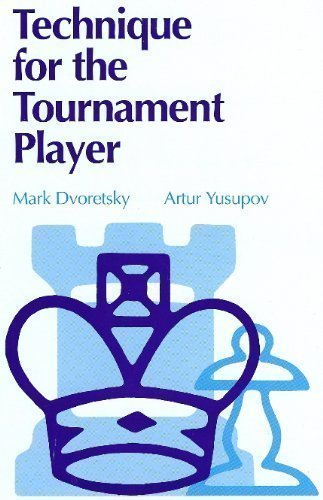
Technique for the Tournament Player
Mark Dvoretsky, Artur Yusupov
4.0
Published: 1991
Pages: 240
ISBN: 9780805039009
Description
A classic practical manual on converting advantages, handling technical positions, and playing accurately in the phases where many tournament games are decided.
Where to Buy
About This Book
Technique for the Tournament Player by Mark Dvoretsky, Artur Yusupov is a strong candidate for players who want serious improvement material built around tournament technique and conversion skill. Rather than treating chess study as a random collection of puzzles, openings, and scattered advice, the book gives readers a more coherent way to improve in the area that matters most for the title. That makes it especially attractive for modern club players who want books that lead to practical gains instead of isolated entertainment. One of the biggest reasons this book stands out is that it turns technical positions into teachable lessons on precision, discipline, and choosing the cleanest path to a full point. Many chess books promise improvement but never clearly explain what kind of thinking they are trying to build. This title is more focused. It helps readers understand recurring positions, common mistakes, and the logic behind stronger decisions, which is exactly what makes a chess book worth revisiting after the first read. The material is most valuable because it connects concepts to decisions that appear in real games. Readers are not just given abstract principles; they are shown how those principles influence planning, calculation, and move selection over the board. That practical link is important because many improving players already know a lot of chess vocabulary but still struggle to apply it when the position becomes tense or unclear. A useful way to think about the book is to view it as a training bridge. It takes readers from general chess knowledge toward more dependable over-the-board performance. The lessons tend to reinforce themes such as conversion technique, practical endgames, and playing with an edge. Even if a player has seen these ideas elsewhere, a well-structured book can make them much more usable by showing how they fit together. The book also has long-term value because the underlying lessons are durable. Chess fashions change, opening theory moves quickly, and software recommendations evolve, but sound understanding around tournament technique and conversion skill continues to matter. That durability is one reason this title is worth adding to the catalog. It should appeal not only to readers looking for a single read, but to players building a personal study library they can return to repeatedly. For your catalog specifically, this book fills a meaningful gap. It broadens coverage for readers interested in endgame and gives another option beyond the authors already represented in the database. It also has strong search intent potential because players often look for direct solutions to problems like reducing counterplay and technical discipline. Books that answer those practical questions tend to perform well because readers can immediately picture how the material fits into their own training. This title is best suited to serious tournament players who want stronger conversion skill and cleaner practical decision-making. Beginners may still benefit from selected chapters, but the real payoff comes when the reader is ready to study actively, compare ideas, and test the lessons in tournament or club play. As with most good chess instruction, the book becomes more valuable when the reader pauses to analyze positions independently rather than reading passively from start to finish. Overall, Technique for the Tournament Player deserves a place in the catalog because it combines recognizable author value, strong instructional intent, and practical appeal. It supports the site's broader goal of helping players choose books that solve real chess problems. For readers searching for a reliable next purchase in this area, it is a convincing addition and a commercially relevant title for an Amazon-affiliate-driven book collection. This title also strengthens the practical tournament side of the catalog because it addresses a problem competitive players recognize immediately: getting an advantage is not the same as finishing the job. Books that deal with conversion technique, technical discipline, and reducing counterplay tend to resonate with players who have already experienced painful half-points slipping away from them. That practical relevance makes the book easy to position in recommendation copy. It is not vague about the benefit it offers. Readers can immediately understand why they might need it, especially if they have lost won endings, mishandled better positions, or struggled to choose the cleanest continuation when under pressure. Clear problem-solution books are often the easiest to publish effectively. In a broader sense, the book also complements more modern strategy and endgame titles by showing the classical foundations of tournament technique. That historical and instructional value gives it depth beyond simple practical utility. For a curated library that wants to serve serious improvers, it is a very sensible title to move into published status. This also makes the title easier to recommend on a buying page because the reader can quickly see what problem it solves, what kind of study experience it offers, and why it deserves space in a serious chess library. In practical terms, the best chess books are rarely the ones that merely sound impressive. They are the books that fit a reader's present need, reward careful rereading, and continue to produce useful lessons after the first pass. Each of these qualities increases the long-term value of a recommendation and helps the book stand out in a crowded marketplace. For a curated chess catalog built around improvement, that combination of clarity, depth, and repeat usefulness is exactly what turns a decent listing into a genuinely publishable one.
What You'll Learn
Build a stronger understanding of conversion technique
Improve practical skill in practical endgames
Learn how stronger players handle playing with an edge
Use study sessions to improve reducing counterplay
Turn training ideas into better results in technical discipline
Who This Book Is For
This book is aimed at serious tournament players who want stronger conversion skill and cleaner practical decision-making. It is especially useful for readers who already play regularly and want a more structured path in this topic. Players who enjoy thoughtful study, annotated examples, and practical training methods will benefit most. Absolute beginners can still browse it, but it is best for readers ready to reflect on their decisions and apply the lessons in real games.
Reader Reviews
Goodreads community
4.0
There are no visible text reviews on Goodreads, but the public rating profile is positive overall and suggests that readers value the book as a serious training title on technique and practical endgame play.
TWIC review
4.0
The Week in Chess describes this title as high-level but still engagingly written, with practical endgame themes tested in training, which aligns with its reputation as a serious technique manual.
ChessPub forum member
4.0
In a ChessPub discussion on Dvoretsky books, one experienced user specifically cites Technique for the Tournament Player as among the most instructive volumes for practical technical improvement.