Loading...
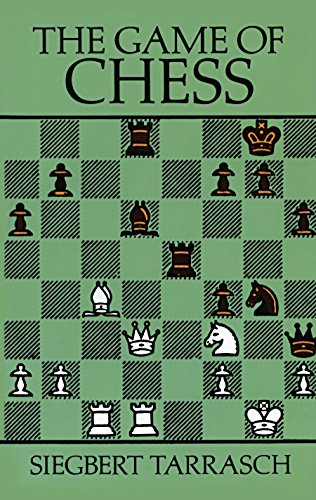
The Game of Chess
Siegbert Tarrasch
4.5
Published: 1931
Pages: 424
ISBN: 9780486254470
Description
A timeless classic by one of the greatest chess teachers in history. Tarrasch covers all phases of the game with clear explanations and instructive examples. His systematic approach to chess instruction influenced generations of players.
Where to Buy
About This Book
The Game of Chess by Dr. Siegbert Tarrasch is one of the most important instructional works in chess history, written by a man widely regarded as the greatest chess teacher of the classical era. Originally published in German as "Das Schachspiel" in 1931, this comprehensive guide covers all phases of the game with the systematic clarity and pedagogical brilliance that made Tarrasch the most influential chess instructor of his generation. Tarrasch was not only a world-class player who challenged for the World Championship but also a gifted communicator who could explain complex chess ideas with remarkable clarity. His famous dictum "Chess, like love, like music, has the power to make men happy" reflects his deep passion for the game and his belief that chess should be both instructive and enjoyable. The book is divided into three main sections covering the opening, middlegame, and endgame. This comprehensive structure makes it a complete chess education in a single volume. Tarrasch believed that chess understanding should be built systematically, with each phase of the game receiving proper attention. The opening section presents Tarrasch's classical approach to chess openings. He emphasizes the importance of controlling the center with pawns, developing pieces to active squares, and castling early for king safety. While some of his specific opening recommendations have been superseded by modern theory, the underlying principles remain as valid today as when they were written. The middlegame section is where Tarrasch's teaching genius truly shines. He covers fundamental strategic concepts including the value of the center, the importance of piece activity, the role of pawn structure, and the art of planning. His explanations are built on clear principles that give readers a framework for understanding any position. Tarrasch's famous rules, while sometimes oversimplified, provide excellent guidelines for developing players. The endgame section covers essential endgame knowledge with Tarrasch's characteristic thoroughness. He explains basic checkmates, king and pawn endings, rook endings, and other common endgame types with clear examples and practical advice. His treatment of rook endings is particularly valuable, as he was one of the first authors to systematically explain the principles of rook play in the endgame. Throughout the book, Tarrasch illustrates his teachings with games from his own career and from other masters of his era. His annotations are instructive and focused on the principles being taught, making the games serve as practical demonstrations of theoretical concepts. The combination of clear principles and illustrative games creates a powerful learning experience. Tarrasch's writing style is authoritative yet accessible. He states his principles with confidence and supports them with convincing examples. While modern readers may find some of his dogmatic pronouncements overly rigid, the core principles he teaches form the foundation of sound chess play. Understanding Tarrasch's classical approach provides a solid base from which to explore more modern and flexible ideas. The Game of Chess has influenced countless players and teachers over nearly a century. Many of the concepts and terminology that chess players use today originated in Tarrasch's writings. For players who want to understand the classical foundations of chess strategy, this book remains an invaluable resource that has stood the test of time.
What You'll Learn
Master the classical principles of chess opening play including center control and piece development
Understand fundamental middlegame strategy through Tarrasch's systematic approach
Learn essential endgame techniques from one of history's greatest chess teachers
Develop a solid strategic framework based on time-tested classical principles
Study instructive games annotated with focus on underlying principles rather than variations
Build a comprehensive understanding of all three phases of the chess game
Who This Book Is For
The Game of Chess is suitable for intermediate players rated between 1200 and 1800 who want to build a solid foundation in classical chess principles. It is particularly valuable for self-taught players who may have gaps in their fundamental understanding. Chess history enthusiasts will appreciate the book's historical significance and Tarrasch's unique perspective. Beginners with some playing experience can also benefit from the systematic instruction. Advanced players above 2000 may find the principles too basic but can appreciate the historical context and Tarrasch's pedagogical approach.
Reader Reviews
Classical Chess Fan
5.0
A timeless classic that every serious chess student should read. Tarrasch's principles may seem simple, but they form the foundation of all chess understanding. His clear writing style makes complex ideas accessible. Nearly 100 years old and still relevant.
Chess Teacher
4.0
I use Tarrasch's principles as the starting point for teaching intermediate students. His systematic approach to chess instruction is still the best framework for developing players. Some ideas are dated, but the core principles are eternal. A must-read classic.
History Enthusiast
5.0
Reading Tarrasch is like taking a masterclass from one of the greatest chess minds in history. His passion for the game comes through on every page. The principles he teaches are the bedrock of chess understanding. Essential reading for anyone who wants to truly understand chess.